A client mood board before the appointment
A tattooer built a six option board from one client brief using the Picverce AI Tattoo Generator. What it settled and where it misled the client.
MarketingA tattooer I know kept losing an hour at the start of every consultation. The client arrives with a phone full of other people work and no way to say which part they actually want.
Pointing at a photo of somebody else is not a brief. It is a starting point that needs translating, and that translation was eating the appointment.
What he sent the day before
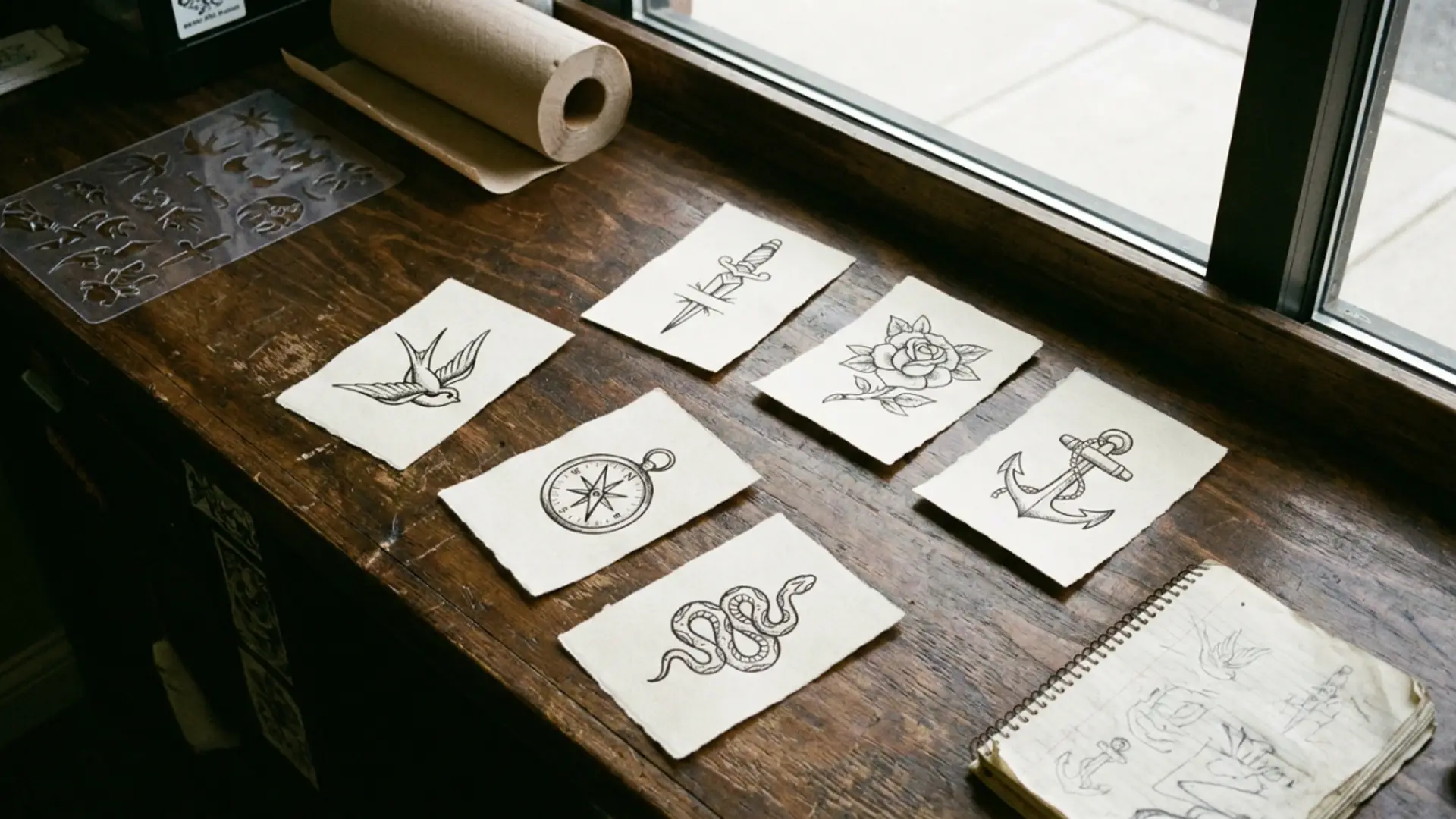
He started asking for a two line brief by message, then built six options in the AI Tattoo Generator and sent back a single board before the client arrived.
The tool carries seventeen ink styles alongside a No Style option, and the names are the ones a client already half knows.
Traditional, Japanese, Blackwork, Fine Line, Dotwork, Geometric, Realism, Ornamental and Chicano among them. That vocabulary is doing work before anything is generated.
Each of those styles also has a page of its own on the site, which he started sending as links when a client had never heard the term.
A link to a style page explains Trash Polka faster than he can, and the client arrives already knowing whether they like it.
He kept the subject identical across all six and changed only the style. That single discipline is what made the board readable.
Changing two things at once makes a board useless. If the subject and the style both move, nobody can say which one they are reacting to.
He writes the prompt once, saves it in a note, and pastes it six times.
A two line brief is enough to start. Subject and rough feeling, nothing more, because anything longer is the client guessing at vocabulary they do not have.
Six styles on one subject
The brief was a heron and a moon, which is about as much as most clients give you.
He ran it through Traditional, Japanese, Blackwork, Fine Line, Dotwork and Ornamental at the lowest resolution the model offered, one variation each.
Six cheap drafts answered a question that would otherwise have been twenty minutes of talking.
The client picked Fine Line immediately and then changed her mind to Dotwork once she saw them side by side, which is exactly the useful outcome.
Talking about fine line versus dotwork is abstract. Looking at the same heron rendered both ways is not.
The board also gives her permission to reject things, which turns out to matter. Saying no to a picture is easier than saying no to a person describing an idea.
He also uploaded a photo of her forearm as a reference on two of the runs, since the landing page takes reference uploads alongside the prompt.
That helped with scale more than with design. Seeing roughly how much arm the piece covers settled a question she had not known to ask.
He stopped doing that on most clients though, because a reference photo pulls the result toward the photo rather than toward the style. The scale answer was not worth the muddier previews.
Where it misled her
This is the part he is careful about, and he says it out loud every time.
A generated design is not a stencil. Line weights that look right on a screen do not account for how ink spreads in skin over ten years.
Fine Line in particular flatters badly. The thinnest lines in those previews are thinner than anything that would still be legible after a decade.
He redraws everything by hand regardless. The board decides the direction and the style, and none of the actual linework survives into the appointment.
The second thing it does not know is the body. A design that reads well as a flat square does not automatically wrap around a forearm, and nothing in the tool is thinking about curvature.
He stopped generating anything that implied a specific placement for that reason. The board shows a subject and a style, not a tattoo on a person.
Size is the third thing it gets wrong. A design that looks detailed on a screen has no scale attached, and a client who pictured it palm sized is pricing a different tattoo.
He writes an approximate measurement under each option now. Two words of text fix a problem the picture cannot.
None of this replaces the drawing. It replaces the twenty minutes of asking what kind of thing did you have in mind.
What made it worth doing
The consultation went from an hour of translation to twenty minutes of decisions.
He tracked it for a month before believing it. The number he gives now is that roughly half of every first appointment used to be spent finding out what the client actually wanted.
Clients arrive having already rejected four of six options, which is four conversations he no longer has.
And he can propose something. Suggesting Ornamental to somebody who came in asking for Tribal is much easier when you can show it on their own subject.
That last part changed what he books. Clients who arrived certain about one style have walked out booked for another, and they are happier because they chose it rather than being talked into it.
He drafts at the lowest resolution the model offers with one variation each. Six of those is a small spend against an hour of consultation time.
Running one subject through several options and judging them side by side is the same method that worked for a hairdresser in a salon consult board from one selfie.
Everything runs through the generation workspace once you submit, so the credit figure follows the model and resolution the same way it does anywhere else.
Same subject, six styles, one page, and a spoken warning about line weight. That is the whole method and it has held up for months.