Headcanon Generator vs Image Generator
One Picverce AI door starts from a character or a ship and four fan art styles. The other starts from a blank prompt. Which to pick depends on your subject.
RecommendationsThese two end up in the same place. The same workspace, the same models, the same settings panel.
What differs is the grid you land on and what that grid assumes you are drawing.
Four styles against the whole catalog
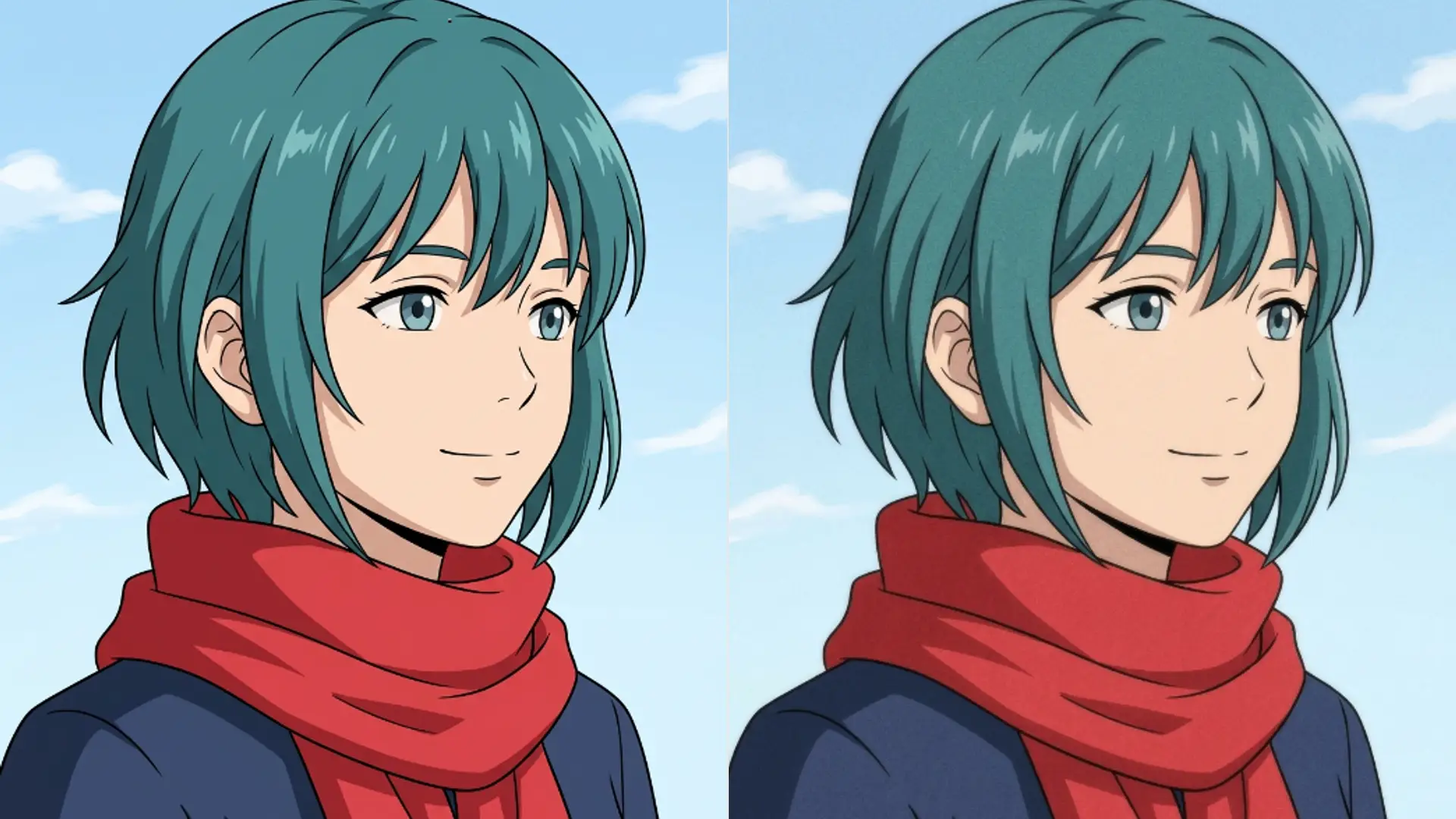
The fan art door is narrow on purpose. The AI Headcanon Generator offers four styles plus a No Style option, and all four are fan art idioms.
Anime or manga, webtoon, chibi and semi realistic. That is the complete list, and it is the shortest style grid on the site.
The general door is wide. the AI Image Generator drops you into the full catalog with no assumption about what you are making.
Four options sounds limiting until you notice they cover most of what fan art actually looks like.
Webtoon and semi realistic in particular are hard to reach reliably from a blank prompt. Describing a webtoon look in words takes several sentences and still drifts.
A preset carries that description for you and carries the same one every time, which is why a narrow grid can beat a wide one on consistency.
If you are making a set rather than a single picture, that repeatability is worth more than the extra options.
What the fan art door assumes
The landing copy tells you plainly. It expects a character, a ship, a crossover or an alternate universe scenario.
Those are four different shapes of request and all four are about people who already exist in somebody else head.
That assumption shows up in the output. Prompts come back as character focused compositions with the figure large in frame.
Ask the same thing through the general door and you are as likely to get a wide scene with the character small in it.
When I asked both for two characters sharing an umbrella, the headcanon route framed them at chest height and the general route gave me a street with two small figures in it.
Neither is wrong. One had an assumption about what the picture was for and the other did not.
You can get the general door to frame tightly by saying so. Asking for a close crop at chest height works, it is just another clause you have to remember.
Chibi on this grid does the same thing it does everywhere. It rebuilds proportions on purpose, so use it for stickers and avoid it when the character has to look like themselves.
Semi realistic is the one to reach for when the character has to be identifiable. It keeps recognisable features while still reading as drawn rather than photographed.
When the general door is better
Three cases, and they are all about the subject rather than the style.
Anything where the setting matters more than the character. A location, a vehicle, a building or a wide establishing shot.
Anything that needs a style outside the four. Oil painting, photographic, pixel art, retro print. None of those are on the fan art grid.
Anything where you already know exactly what you want. A precise prompt does not need a preset, and a preset layered on top of a precise prompt usually fights it.
That last case catches people out. A long careful prompt plus a strong preset gives you a result that honours neither fully.
Use No Style on either side when your description is already doing the work.
The reverse case is simpler. If your subject is a person or a pair of people and you want them drawn in a fan art idiom, the narrow door gets you there in fewer attempts.
What is identical on both sides
Almost everything after the grid, which is worth saying because people assume otherwise.
- The same model list, with the same resolution options published per model.
- Three ratio tabs, portrait, square and landscape, plus a conditional match option when a reference is attached.
- The same credit figure in the settings panel, moving with model and resolution rather than with the door you came in through.
- The same variation limits, set by the model rather than by the theme.
So there is no cost argument for one over the other, and no quality argument either. Model choice decides output quality on both sides equally.
The subject matter rules are the same too. Both sides sit behind the same content limits, so a prompt refused on one is refused on the other.
Which model to reach for is a separate question, and the differences between them are set out in Flux vs Imagen vs Ideogram on Picverce AI.
You can also start on one side and finish on the other. Nothing about entering through a theme restricts what you change once the workspace is open.
Landing on the fan art grid and switching to a style from the wider catalog takes one click. The door decides where you start and nothing else.
So the choice is low stakes. Pick whichever grid is closer to what you had in mind and adjust from there.
Pick the narrow door when your subject is a character and the style is one of the four. Pick the wide one for everything else.